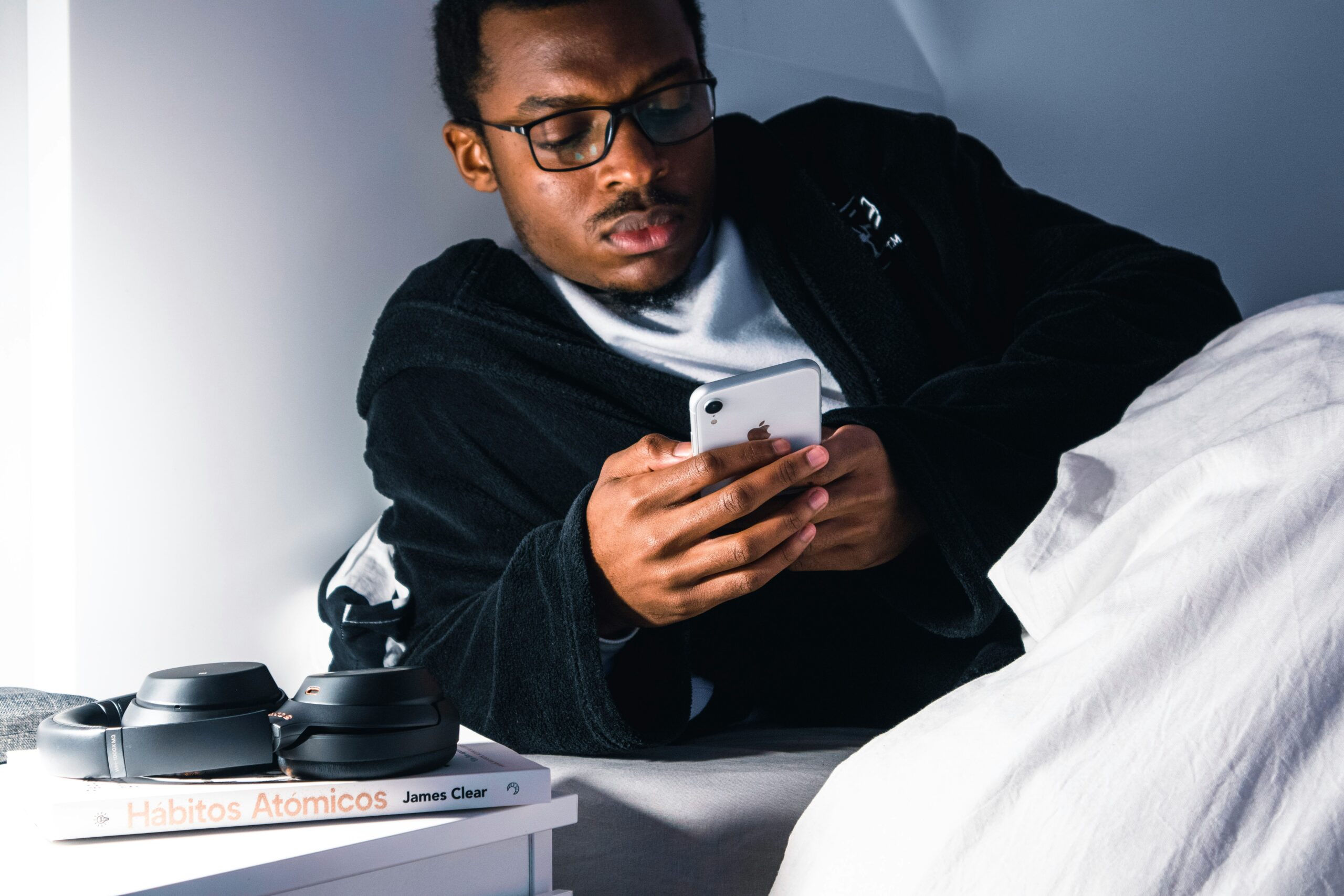
Why Doctors Are Warning About This Common Sleep Habit (And What to Do Instead)
About 70 percent of adults sleep with their phone within arm’s reach. Most of them check it within minutes of turning off the light. The habit feels harmless — it’s become so normal that questioning it seems excessive. But the research on what phone use before sleep does to the brain, hormones, and cardiovascular system is specific, consistent, and worth knowing.
This isn’t a complaint about screen time in general. It’s about what happens physiologically when a device built for maximum engagement gets placed in the most neurologically vulnerable hours of the day. Here’s what’s actually happening — and a seven-night plan to change it.
1. Your Phone Suppresses the Hormone That Makes You Sleep
Melatonin is the brain’s primary sleep signal. The pineal gland produces it in response to darkness. Phone screens emit short-wavelength blue light at intensities almost perfectly calibrated to interfere with that process. Research from Harvard Medical School found that blue light suppresses melatonin for roughly twice as long as green light and shifts the internal clock by up to three hours. Scroll until 11 PM and your brain may not be biologically ready for sleep until 2 AM — regardless of how tired you feel.
The problem isn’t just delayed sleep. Melatonin also has anti-inflammatory, antioxidant, and immune-regulating functions. Chronic suppression carries health costs well beyond fatigue. Night mode reduces blue light somewhat, but studies show it doesn’t eliminate melatonin suppression — because the issue is the light stimulus itself, not just its wavelength.
2. It Keeps Your Brain in Seeking Mode
Social media feeds, news apps, and messaging platforms are designed to produce unpredictable rewards — the same mechanism that makes slot machines hard to put down. Every scroll generates a variable stream of content: neutral, interesting, emotionally charged, then neutral again. That unpredictability triggers dopamine release in a pattern that pushes the brain to continue rather than disengage. You’re not winding down. You’re in active seeking mode — the neurological opposite of what sleep requires.
The brain needs 20 to 60 minutes of progressively reduced sensory input and cognitive demand to transition into sleep. A device delivering endless novel, emotionally variable content during that window makes the transition impossible. A physical book, gentle stretching, or simply lying in a dark room does what the phone can’t — it lets the deactivation process actually happen.
3. It Fragments Your Sleep Architecture
Sleep cycles through light sleep, deep slow-wave sleep, and REM in roughly 90-minute cycles. Deep sleep repairs tissue, consolidates immune function, and clears metabolic waste from the brain. REM processes emotional memory and integrates learning. Melatonin timing regulates how these cycles are structured and how much time you spend in each stage.
When pre-sleep phone use delays melatonin onset, the total time available for full cycling compresses. Sleep monitoring studies show significantly reduced slow-wave sleep and shortened REM in people who use phones before bed compared to phone-free nights. Seven hours with fragmented architecture leaves you less restored than seven hours of intact cycling — which is why you can sleep a full night and still wake feeling off.
4. It Spikes Stress Hormones Right Before Sleep
News feeds, work notifications, and social comparison content reliably trigger cortisol and adrenaline. These hormones are designed to raise alertness and prepare the body for action. At the point in the day when cortisol should be at its lowest — right before sleep — activating content works directly against the hormonal conditions sleep requires.
Studies measuring salivary cortisol have found measurably elevated levels in people who check social media or news in the 30 minutes before bed, compared to people who spend that time reading or in relaxing activity. The effect is strongest for news, which emphasizes threat and urgency by design. A 10-minute journal entry or a few minutes of gratitude practice produces the opposite hormonal effect and supports the wind-down the body is trying to complete.
5. It Teaches Your Brain That Bed Means Awake
The brain learns associations between environments and states. The bed should be associated with sleep. When the bed becomes where you scroll, watch, and engage for an hour each night, the brain starts registering the bedroom as a cue for alertness rather than drowsiness. This is one of the core mechanisms behind chronic insomnia — and phone use in bed is one of its most common current causes.
Once the association is established, it reinforces itself: bed triggers wakefulness, wakefulness triggers phone use, phone use reinforces wakefulness. Breaking it requires rebuilding the association from scratch — keeping the bed exclusively for sleep, leaving the room if you’re awake for more than 20 minutes, eliminating all stimulating activity from the sleep environment. This is the exact protocol cognitive behavioral therapy for insomnia uses. It works because it targets the learned association directly.
6. It Interferes With Memory Consolidation
The transition from wakefulness to sleep is when the brain begins sorting and filing the day’s experiences into long-term memory. New information introduced in the final hour before sleep competes with that consolidation process. Studies consistently show that people who engage in cognitively stimulating activity right before sleep retain less of what they learned that day than people who allow a genuine wind-down period.
The irony: many people use pre-sleep screen time specifically to catch up on reading or educational content. That timing is among the worst possible for retention. The new information competes with the day’s learning during consolidation and can interfere with the encoding of both. The same content consumed earlier in the evening, with a quiet pre-sleep window afterward, is retained significantly better.
7. It Accumulates Into Cardiovascular Risk Over Time
Chronic mild sleep fragmentation — not severe deprivation, just persistent low-grade disruption — produces measurable cardiovascular consequences. Disrupted sleep is independently associated with elevated blood pressure, arterial inflammation, higher rates of heart disease, and greater insulin resistance. Studies show that even two to three weeks of mild sleep disruption produces measurable shifts in inflammatory markers and blood pressure regulation.
The phone-in-bed habit is insidious precisely because the disruption is mild. Most people don’t feel severely sleep-deprived — they just feel slightly off, somewhat tired, a bit foggy. Those are the exact symptoms that send them back to the phone for a dopamine lift, which completes the cycle.
A 7-Night Reset Plan
Night 1: Move your phone charger out of the bedroom. Hallway, kitchen, anywhere else. If you use it as an alarm, buy a cheap alarm clock. This single environmental change is the highest-leverage step in the entire reset.
Night 2: Set a hard cutoff for screen use 60 minutes before your intended sleep time. Use a phone alarm if you need to. Honor it regardless of what you’re in the middle of.
Night 3: Fill the first 20 minutes of the phone-free window with something physical and calm — a gentle stretch, a warm shower, a slow walk through the house. You’re beginning to train the nervous system to associate this hour with deactivation rather than stimulation.
Night 4: Add a wind-down anchor — one consistent activity that signals sleep is approaching. A physical book, a journal, herbal tea in a chair away from the bed. Repetition builds the conditioned response over days.
Night 5: Address the sleep environment itself. Fully dark — blackout curtains or a sleep mask. Cool — 65 to 68 degrees Fahrenheit. No LED lights. The room should feel like a sleep space, not a living space.
Night 6: If anxiety or racing thoughts have been driving the phone use, address them directly. Write tomorrow’s concerns in a notebook before your wind-down starts. Externalizing worries onto paper interrupts the mental rehearsal loop that makes the phone feel necessary.
Night 7: Assess the week. Most people notice measurable improvement in how quickly they fall asleep, morning alertness, and mood by night five or six. That improvement is the feedback that makes the change stick — and it comes entirely from removing one very common, very normalized behavior from the hours that matter most.
Disclaimer: This article is for general informational purposes only and is not a substitute for medical advice. Sleep disorders can have many causes requiring professional evaluation. If persistent sleep difficulty doesn’t respond to lifestyle changes, consult your doctor or a sleep specialist.
Sources & References
- Sleep Foundation — Can Your Phone Affect Your Sleep?
- Harvard Health Publishing — Blue Light Has a Dark Side
- Mayo Clinic — Sleep Tips: 6 Steps to Better Sleep
- National Institute of Mental Health — Sleep Disorders
- PubMed — Blue Light, Melatonin & Sleep Research